Apple Mail Not Working: How to Fix Common Issues in 2026
Struggling with Mac Mail issues after a macOS update? This guide offers step-by-step solutions to restore functionality, addressing common problems caused by system changes. Stay informed with the latest updates, compatibility tips, and security enhancements to ensure your email app runs smoothly on your Mac.

Article Updates
- October 2025: Updated with current information, added 9 new reference sources, and expanded FAQ with 2 new questions
- August 2025: Updated with current year statistics, enhanced security information, and expanded IMAP support details to provide readers with the most accurate and comprehensive guidance. Compatibility information has also been refreshed to reflect the latest technical requirements and supported platforms.
Many Mac users encounter email problems after upgrading to newer macOS versions. According to Apple's official support documentation, system updates can occasionally disrupt Mail app configurations and account settings. In this comprehensive guide, we'll show you how to systematically diagnose and fix these issues to restore your Mac Mail functionality step by step.
More like this:
- A Comprehensive Guide on the Best Email App for Mac Users
- The Best Alternatives to Apple Mail for Windows 10 in 2021
- How to Create a Gmail Desktop App for PC or Mac in 5 Steps
Mac Mail Is Not Working After System Updates
Though newer macOS versions are designed to enhance user productivity, Apple's developer documentation acknowledges that system updates can occasionally impact third-party integrations and built-in applications. System updates frequently trigger temporary authentication resets and configuration changes that affect Mail app functionality. You are not alone in struggling with these email issues after updating your system.
Quick diagnostic steps:
- Re-authenticate your Apple ID credentials: Enter your password in the Apple ID section of System Preferences. According to Apple's authentication guidelines, system updates can occasionally reset keychain access, requiring manual password re-entry to restore Mail app functionality. This process refreshes authentication tokens and resolves most credential-related connection failures.
- Rebuild your mailbox database: Use the "Rebuild mailbox" option from the Mailbox menu. Apple's official documentation notes that this process will temporarily remove messages from your local view while re-downloading them from the server. Your mailbox will appear empty during this process, but all messages will be restored once synchronization completes. This rebuilding process repairs corrupted index files that commonly develop during system updates.
If the above solutions did not resolve your issue, there are several advanced troubleshooting options you can implement.
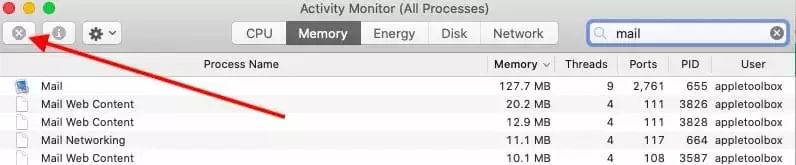
- Force quit Mail processes: Launch Activity Monitor from Applications > Utilities, search for "Mail" in the process list, select all Mail-related processes, and click the X button to terminate them. Apple's Activity Monitor guide explains that this clears any corrupted processes that may be preventing Mail from launching properly. Terminating these processes forces macOS to restart Mail with fresh system resources and cleared memory states.
- Clear Mail application state: In Finder, navigate to ~/Library/Containers/com.apple.mail/Data/Library/Saved Application State and delete the "com.apple.mail.savedState" folder. This removes cached application state data that may be corrupted. According to Apple's application programming documentation, saved state files preserve window positions and application configuration between launches, but these files can become corrupted during system updates.
- Reset Mail containers: In Finder, type "~/Library/Containers" in the Go to Folder dialog. Move these two folders to your desktop: "com.apple.mail" and "com.apple.MailServiceAgent" for safekeeping before deletion. These container directories store all Mail application data and preferences.
- Remove Mail database files: Delete the following database files: Envelope Index, Envelope Index-shm, and Envelope Index-wal. According to SQLite's technical documentation, these database files can become corrupted and prevent proper Mail operation. The Envelope Index maintains message metadata, while the -shm and -wal files manage database transactions and write-ahead logging.
After completing these steps, restart your Mac completely. The system will rebuild your Mail configuration from scratch, which should resolve most post-update compatibility issues.
If this comprehensive fix didn't resolve your problem, try using Disk Utility's First Aid feature to check for system-level corruption. Navigate to ~/Library using Finder's Go menu, delete the entire Mail folder, restart your system, and launch Mail. The application will automatically reconstruct your email database from server-stored data.
Common Issues with Mac Mail and How to Fix Them
Mac Mail Is Not Launching
If Mac Mail fails to launch entirely, this typically indicates either application corruption or system-level permission issues. Apple's troubleshooting documentation recommends verifying application integrity before attempting more complex solutions.
- Verify Mail application location: Check that Mail.app exists in your Applications folder. Open Finder, navigate to Applications, and look for the Mail application. If present, double-click to launch. Missing or relocated Mail.app files indicate system corruption that may require macOS reinstallation.
- Check application permissions: According to Apple's security guidelines, macOS may block applications that lack proper permissions after system updates. Navigate to System Preferences > Security & Privacy > Privacy and verify that Mail has necessary permissions for Full Disk Access and Automation.
If Mail.app is present but still won't launch, the issue likely stems from corrupted application preferences or system-level permission conflicts.
Mac Mail Keeps Crashing
Frequent Mail crashes often indicate corrupted user data, incompatible plugins, or insufficient system resources. Apple's crash analysis documentation identifies several common causes for application instability in Mail.app, including memory leaks, database corruption, and conflicting third-party extensions.
Here are systematic solutions to resolve persistent crashes:
- Solution 1: Update your operating system: Navigate to System Preferences > Software Update and install any available macOS updates. Apple's update documentation explains that newer system versions often include critical stability fixes for built-in applications. System updates address known bugs, memory management issues, and compatibility problems that cause application crashes.
- Solution 2: Rebuild mailbox databases: Select your problematic mailbox in Mail, then choose Mailbox > Rebuild from the menu bar. This process reconstructs corrupted mailbox indexes that commonly cause application crashes. Database corruption frequently occurs when Mail is force-quit during message synchronization or when disk errors affect stored data.
Mac Mail Is Running Slow
Mail performance issues typically result from oversized mailbox databases, excessive message storage, or insufficient system resources. According to Apple's performance optimization guidelines, desktop email clients commonly experience slowdowns when managing databases exceeding 10GB or containing more than 100,000 messages.
- Solution 1: Archive old messages: Remove unnecessary messages from your local mailboxes by archiving them to server-side storage or deleting them entirely from your webmail interface. Large local databases slow down search operations, indexing, and message retrieval.
- Solution 2: Reinstall Mail application: While Mail.app cannot be uninstalled traditionally, you can reset its entire configuration by removing user data and allowing the system to rebuild fresh databases. This eliminates accumulated cache files and corrupted preferences that degrade performance over time.
- Solution 3: Clear application state data: Navigate to Finder > Go to Folder, hold the Option key, and select Library. Follow this path: Containers > com.apple.mail > Data > Library > Saved Application State. Create a backup of this folder, then delete it completely. Restart your Mac to allow Mail to generate fresh application state files. This removes corrupted state data that can cause memory leaks and performance degradation.
These solutions address the underlying database corruption and resource conflicts that cause Mail performance degradation.
Mac Mail Is Not Receiving Emails
Email reception problems often stem from server connectivity issues, authentication failures, or incorrect account configurations. Apple's Mail setup documentation emphasizes the importance of proper server settings for reliable message delivery.
Solution 1: Manual message retrieval
Try manually fetching messages by selecting Mailbox > Get New Mail from the menu bar. If this fails, the issue likely involves server connectivity or authentication problems rather than automatic polling configuration.
Solution 2: Diagnose connection problems
Use Mail's built-in Connection Doctor by selecting Window > Connection Doctor from the menu bar. Apple's diagnostic documentation explains that green indicators show successful connections, while red indicators identify specific connection failures. Address any red-flagged connections by verifying server settings with your email provider. Common connection failures include incorrect port numbers, SSL/TLS misconfigurations, and firewall blocking.
Additionally, remove and re-add your email accounts through System Preferences > Internet Accounts to refresh authentication credentials and server configurations.
Mac Mail Is Not Sending Emails
Outgoing mail problems typically involve SMTP server misconfigurations, port blocking, or authentication issues. According to IETF's SMTP specifications, proper server configuration is essential for reliable email transmission.
- Solution 1: Verify SMTP server configuration: Navigate to Mail > Preferences, select your account, and click Server Settings. Verify that your SMTP server information matches your email provider's specifications exactly. Select Edit SMTP Server List to review and correct any discrepancies. Contact your email provider if server details don't match their documented requirements. Common configuration errors include incorrect server addresses, wrong authentication methods, and mismatched port numbers.
- Solution 2: Check firewall and port configurations: Use Connection Doctor to identify firewall issues affecting ports 25, 465, or 587. IANA's port registry confirms these as standard SMTP ports. Network administrators may need to configure firewall exceptions for these ports. Port 587 with STARTTLS encryption is the recommended configuration for modern SMTP implementations.
Mac Mail Fails to Filter Junk
Ineffective spam filtering usually results from disabled junk mail settings, corrupted filter databases, or inadequate training data. Apple's junk mail documentation explains that Mail uses adaptive filtering that improves with user feedback over time.
- Solution 1: Enable and configure junk filtering: Navigate to Mail > Preferences > Junk Mail and ensure "Enable junk mail filtering" is selected. Verify that your address book contains only legitimate contacts, as Mail automatically trusts messages from known senders. This whitelist approach prevents false positives for important correspondence.
- Solution 2: Reset junk mail training: If filtering performance has degraded, reset Mail's junk filter completely through Preferences > Junk Mail > Reset. This clears all previous training data, allowing you to retrain the system from scratch. Consistently mark spam messages as junk and legitimate messages as "Not Junk" to improve filtering accuracy. According to Bayesian filtering methodology, adaptive spam filters require consistent user feedback to maintain high accuracy rates.
For messages incorrectly marked as junk, click "Not Junk" to restore them to your inbox and train the filter. Add trusted senders to your Contacts app to prevent future false positives.
- Solution 1: Mark legitimate messages: Click the "Not Junk" button to restore incorrectly filtered messages and improve future filtering accuracy through machine learning feedback.
- Solution 2: Manage trusted contacts: Add legitimate senders to your Contacts application to automatically whitelist their messages and prevent filtering errors.
- Solution 3: Review custom filtering rules: Check Mail > Preferences > Rules for any custom email filtering rules that might interfere with junk mail detection. Conflicting rules can override automatic spam filtering and cause unexpected message routing.
Mac Mail Is Not Working with Your Email Provider
Email provider compatibility issues often arise from updated security protocols, authentication changes, or server modifications. IMAP protocol specifications and provider-specific implementations can create configuration conflicts that prevent proper Mail operation. Major email providers frequently update authentication requirements and security protocols, which can disrupt existing Mail configurations.
Troubles with Gmail
- Verify web access and refresh credentials: Confirm that you can access Gmail through your web browser, then restart Mail or manually re-enter your password instead of relying on Keychain. According to Google's IMAP documentation, authentication tokens may expire and require manual renewal, particularly after security updates or password changes.
- Configure app-specific authentication: If Mac Mail is not working with Gmail, temporarily disable two-factor authentication or generate an app-specific password through your Google Account settings. Google's app password documentation provides step-by-step instructions for creating dedicated authentication credentials for desktop email clients. App-specific passwords bypass two-factor authentication while maintaining account security.
- Manual account configuration: Add your Gmail account manually through Mail > Preferences > Accounts, specifying IMAP settings explicitly rather than relying on automatic configuration. Use imap.gmail.com for incoming mail and smtp.gmail.com for outgoing mail with appropriate SSL/TLS settings.
Troubles with Yahoo
- Verify account status and system compatibility: Confirm that your Yahoo account functions properly through web access, then verify you're running a supported macOS version. Outdated systems may lack compatibility with Yahoo's current security protocols. According to Yahoo's email client documentation, third-party app access requires specific authentication configurations.
- Reinstall Yahoo account configuration: Remove and re-add your Yahoo account through System Preferences > Internet Accounts to refresh all server settings and authentication credentials. This process clears cached credentials and establishes fresh server connections.
- Temporarily disable security software: Some third-party security applications can interfere with email protocols. Temporarily disable antivirus or firewall software to test if they're blocking Yahoo Mail connections. Security software may incorrectly flag legitimate IMAP/SMTP traffic as suspicious activity.
- Restart Mail application: If Mac Mail is not working with Yahoo after configuration changes, quit Mail completely and relaunch it to apply new settings. Configuration changes don't always take effect until Mail restarts completely.
Mac Mail Not Working? There Are Options
Hopefully, these comprehensive troubleshooting steps have resolved your Mac Mail issues and restored full email functionality. These solutions address the most common problems experienced by Mac Mail users and are based on documented fixes from Apple's support resources and real-world user experiences. Systematic troubleshooting resolves the majority of desktop email client issues without requiring professional technical support.
If problems persist after implementing these solutions, consult Apple's official Mail troubleshooting documentation or contact Apple Support for advanced diagnostic assistance.
If you're considering switching to Windows or need a reliable cross-platform email client, Mailbird offers a comprehensive email management solution. Mailbird is currently available for both Windows and macOS, providing a unified email experience with intuitive interface design, multiple account management, and extensive customization options. For users seeking a more reliable alternative to Mac Mail's frequent post-update issues, Mailbird delivers consistent performance across system updates with robust IMAP support and advanced email organization features.
Frequently Asked Questions
How do I fix an error in Mac Mail?
According to Apple's troubleshooting documentation, most Mac Mail errors stem from corrupted preferences, authentication issues, or server connectivity problems. Start by verifying your account settings are correct, then rebuild your mailbox indexes and restart your Mac. If these basic steps don't resolve the issue, force quit the Mail application, delete the Saved Application State folder, and allow Mail to rebuild its configuration. For persistent problems, check for custom mail rules or firewall settings that might interfere with proper Mail operation.
Why is my email not working on my Mac?
Email functionality issues on Mac typically result from system update conflicts, corrupted Mail preferences, or changed server configurations. Apple's release documentation acknowledges that major system updates can occasionally disrupt email client settings. Check all your Mail account configurations, restart the Mail application, or completely restart your Mac. For Gmail or Yahoo accounts that won't connect, temporarily disable advanced security features and try re-adding your accounts manually through System Preferences > Internet Accounts.
Why won't my Mac let me log into my email?
Authentication problems after system updates commonly occur when keychain access is disrupted or when email providers update their security protocols. Apple's Keychain documentation explains that stored passwords may become inaccessible after major system changes. Verify your account settings are accurate, manually re-enter your passwords instead of relying on saved credentials, and restart the Mail application. If server-side authentication continues failing, contact your email provider to confirm their current IMAP/SMTP server requirements and verify that your account hasn't been flagged for suspicious activity.
Can I use Mac Mail with multiple email accounts?
Yes, Mac Mail supports multiple email accounts simultaneously through System Preferences > Internet Accounts. According to Apple's account management documentation, you can add unlimited email accounts from various providers including Gmail, Yahoo, iCloud, and custom IMAP/POP3 accounts. Mac Mail displays all accounts in a unified inbox view or separate mailboxes depending on your preference settings. Each account maintains independent server settings, authentication credentials, and synchronization preferences.
How do I prevent Mac Mail problems after system updates?
To minimize Mac Mail disruptions during system updates, create a complete backup of your ~/Library/Mail folder before updating macOS. According to Apple's backup recommendations, Time Machine backups preserve all Mail data and preferences. Additionally, document your current account settings including server addresses, port numbers, and authentication methods. After updating, verify all account configurations match your documented settings and rebuild mailboxes if synchronization issues occur. Regular maintenance including archiving old messages and clearing cached data reduces the likelihood of post-update complications.


