How to Attach a File to an Email
Attaching files to emails follows a universal workflow across providers, but size limits, blocked file types, and cloud integration vary significantly. Gmail caps attachments at 25 MB, Outlook uses OneDrive, and Apple Mail Drop supports up to 5 GB, while multi-account desktop clients require proper configuration for reliable sending.



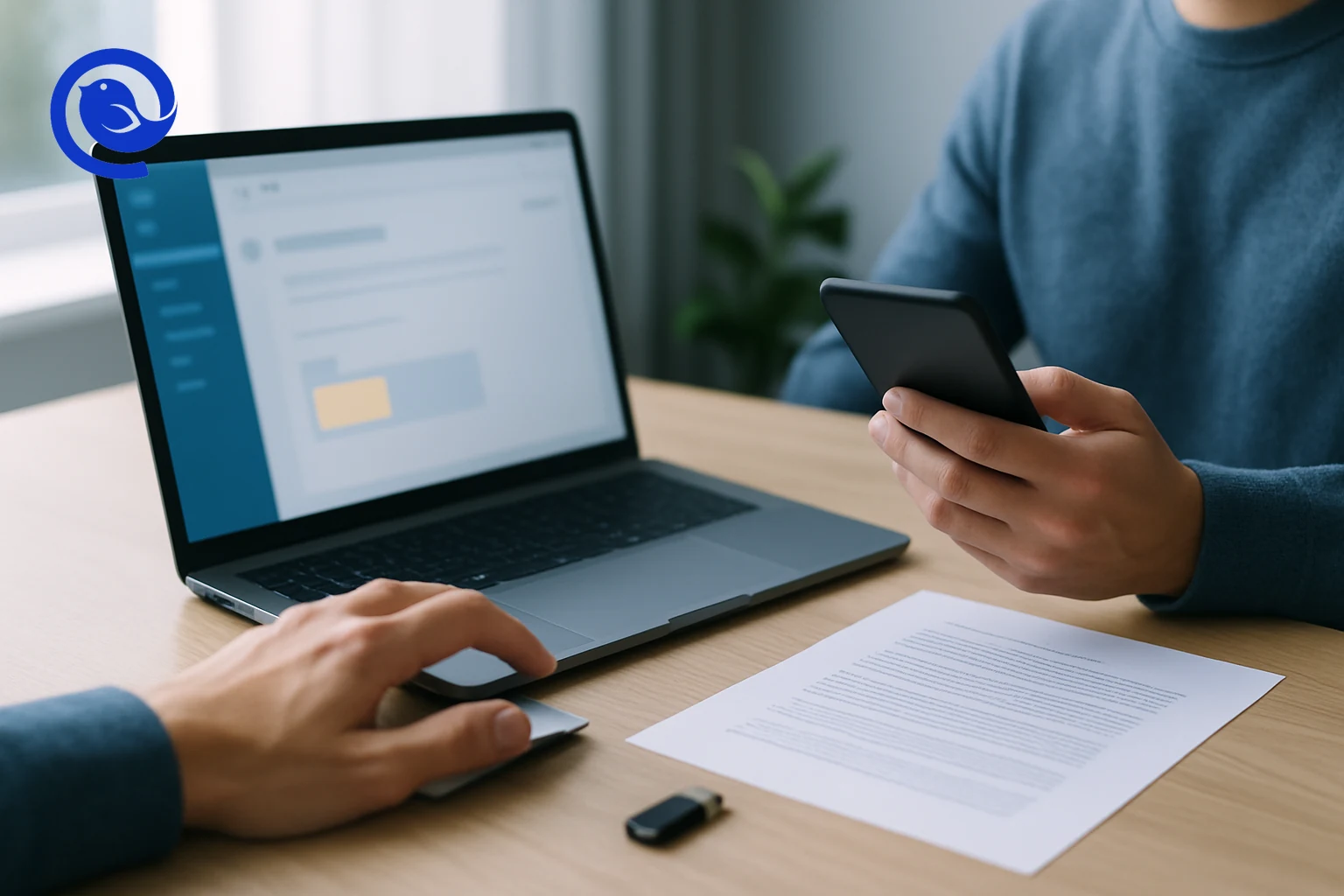
Attaching a file to an email is straightforward across all major email clients: compose a new message, click the paperclip or Attach button, select your file from local storage or cloud services, wait for the upload to complete, and send . However, the underlying size limits, blocked file types, and cloud-integration behaviors differ significantly among providers—Gmail enforces a 25 MB limit and converts larger attachments to Google Drive links [1] , Outlook offers OneDrive integration with granular permission controls [2] , Apple Mail on iPhone supports document scanning and Mail Drop for attachments up to 5 GB [3] [4] , and Zoho Mail provides higher limits on paid plans plus cloud storage attachments and annotation tools [5] . For users managing multiple accounts in a unified desktop client, understanding these provider-specific constraints and configuring IMAP and SMTP settings correctly ensures reliable attachment sending across all services.
Key Takeaways
- Universal workflow: All major clients use a paperclip or Attach icon to select files, with drag-and-drop supported in most desktop and web interfaces.
- Size limits vary by provider: Gmail and Yahoo limit direct attachments to 25 MB, ProtonMail to 25 MB outgoing and 50 MB incoming, while Zoho Mail offers up to 1 GB on premium plans and Apple Mail Drop supports up to 5 GB via cloud storage.
- Cloud-first trend: Gmail automatically converts oversized attachments to Google Drive links, Outlook integrates OneDrive and SharePoint with permission controls, and Apple Mail Drop stores large files for 30 days.
-
Blocked file types:
Executable files like
.exe,.bat,.js, and.vbsare blocked by Gmail and many other providers to prevent viruses; use safer formats or share links instead. - iPhone capabilities: Apple Mail on iPhone supports attaching photos, videos, scanned documents (as PDFs), and inline drawings, with Mail Drop handling large files seamlessly.
- Multi-account management: Desktop clients like Mailbird centralize attachment workflows across multiple providers when configured with correct IMAP and SMTP settings, respecting each service's limits and behaviors.
Attaching Files in Desktop Email Clients
Gmail Web Interface
In Gmail's desktop web interface, attaching files follows a simple pattern. Open Gmail, click Compose , then click the Attach icon (paperclip) at the bottom of the compose window. Choose the files to upload from your computer and click Open . The files appear as attachments in the email draft [1] . Images can also be dragged directly into the compose window, triggering automatic attachment. To remove an attachment after adding it, click the Close icon (X) next to the attachment name.
Gmail enforces a 25 MB attachment limit for personal accounts; for work and school accounts, administrators may configure different limits
[6]
. When total attachment size exceeds this threshold, Gmail automatically converts attachments into Google Drive links, uploading files to Drive and inserting links in the email
[1]
. Senders must ensure Drive link permissions allow intended recipients to access the content. Gmail blocks executable file types including
.exe
,
.bat
,
.js
, and
.vbs
to prevent viruses; attempting to attach these files produces an error
[1]
. Attachments count toward overall Google storage shared across Drive, Photos, and Gmail—once storage is full, users cannot send or receive attachments until space is freed.
Gmail also supports attaching entire emails as files. To forward an email as an attachment, select the email in the inbox, click the
More
menu (three dots), and choose
Forward as attachment
. Alternatively, drag emails directly into a compose window to attach them as
.eml
files
[7]
[8]
. If the total size of attached emails exceeds 25 MB, Gmail attaches them via Google Drive automatically.
Microsoft Outlook (Desktop and New Outlook)
Outlook provides extensive attachment options spanning local files, cloud links, and inline images. In a new message, reply, or forward, select Attach File from the Insert group on the Message tab. Choose files from suggested cloud files, OneDrive locations, or your local computer via Browse This Computer [2] . When selecting a file from local storage or a group document library, Outlook attaches a copy; when selecting from OneDrive or SharePoint, Outlook offers additional permission options and information, allowing senders to send either a link or a copy.
Sending a link keeps email size small and enables permission controls such as Organization can Edit , Organization can View , Recipients can Edit , or Recipients can View [2] . New Outlook detects potential permission problems—for example, when recipients cannot view a file stored on a SharePoint site accessible only to the sender—highlighting the link in red with a warning icon and offering a Manage access option to adjust permissions before sending. Users can also upload a locally saved file to OneDrive from within Outlook by selecting Attach File , choosing the file, clicking the down arrow for the attachment, and selecting Upload to OneDrive , after which the attachment appears as a "friendly link" that can be converted back to a copy or have permissions adjusted.
To insert pictures directly into the message body, position the cursor, select Insert , then Pictures , and choose images from local or online locations; images display inline and can be resized by dragging corner handles [2] . Outlook also supports attaching emails to other emails or calendar events: in new Outlook, drag the email you want to attach directly into the message you are composing, where a "Drop messages here" hint appears and the email becomes an attachment.
Yahoo Mail Web Interface
Yahoo Mail supports attaching essentially any file type—images, spreadsheets, PDFs—as long as total attachment size does not exceed 25 MB per email. Click Compose, select the Attach icon (paperclip) next to the Send button, choose Attach files from computer, highlight desired files or folders, and click Open. Files upload and appear as attachments in the draft. If you save the draft, attachments remain associated with it and can be revisited later.
Yahoo Mail does not support attaching folders directly; attempting to do so produces an error. To send multiple files organized in a folder, compress the folder into a zip archive first: place all desired files into a folder, right-click the folder in Windows, select Send to, then choose Compressed (zipped) folder. Rename the resulting zip file descriptively, return to Yahoo Mail, click Compose, select the paperclip icon, locate the compressed folder, and double-click it to attach. The zip file uploads as a single attachment containing all files, respecting the 25 MB limit.
ProtonMail and Zoho Mail
ProtonMail allows attaching multiple files by clicking the Attachments button at the bottom right of the email composer or by dragging and dropping files directly into the composer in the web app [9] . To select multiple files, click the first file, then hold the Ctrl key (Windows/Linux) or Cmd key (macOS) while selecting additional documents. ProtonMail caps outgoing attachments at 25 MB total and incoming attachments at 50 MB, with a limit of 100 attached files per email. Encoding increases apparent file sizes during transport, so senders should account for roughly one-third overhead when approaching limits.
Zoho Mail offers comprehensive attachment options. Draft a message, then attach files by dragging them from the desktop into the composer (a "Drop files here" area appears) or by clicking an Attachment icon to open the system file browser [5] . The Desktop tab opens the file browser; users can drag and drop or click to attach files, select multiple files using Ctrl or Shift , and click Attach to add them. Zoho Mail's My Attachments section allows browsing files already sent or received, filtering them, and reattaching selected files to new emails—efficient for reusing commonly sent documents.
Zoho Mail supports attaching files directly from cloud storage services including Google Drive, Dropbox, OneDrive, and Box. When first choosing a cloud service from the "Attach from Cloud" section, authenticate and allow Zoho Mail to browse and attach files from that service, then select and attach multiple cloud files [5] . After attaching files, click an Annotate option below a file to open an annotation interface where you can highlight portions, add text, and use a toolbox to mark up the image before clicking Done to save annotations. Zoho Mail also offers a Download as ZIP button once attachments are uploaded, generating a zip file containing all attachments for easy desktop saving. Attachment limits vary by plan: Mail Lite supports up to 250 MB, Workplace Standard up to 500 MB, and Mail Premium and Workplace Professional up to 1 GB, while personal users face a 20 MB maximum email size.
Mailbird: Unified Desktop Attachment Workflows
Mailbird, as a Windows desktop email client, provides a unified interface for attaching files across multiple email providers. Users can drag and drop an attachment directly into the email they are composing; Mailbird prompts whether the item should be attached as a file or placed inline within the email body. Alternatively, click the paperclip icon in the compose window and choose files to attach from your computer. Mailbird also supports copying and pasting attachments from other emails: select an attachment in an existing message, press Ctrl+C to copy, then press Ctrl+V in a new compose window to add the copied attachment.
Before attaching a file in Mailbird, save the exact version you intend to send, open it once to confirm correctness, and check file size using operating-system tools like Properties (Windows) or Get Info (macOS). If a file approaches 20–25 MB, anticipate potential problems with service limits and consider compressing the file or switching to a share link. Rename files with clear, meaningful names such as
lease-agreement-signed.pdf
or
q3-budget-review.xlsx
rather than vague labels like
Scan0001
or
final-final
, so recipients understand the file's purpose instantly.
Wait for attachments to fully appear in the draft before sending, particularly when uploading large files over slower connections. Use the paperclip or Attach button, choose the file, and wait until the file name or thumbnail is visible in the draft before proceeding; sending while an attachment is still uploading can cause partial uploads or error messages. Explicitly mention attachments in the message body—for example, "Attached is the signed lease PDF for review"—and match that sentence to the actual file shown in the draft to avoid forgetting the referenced file or attaching the wrong one.
Because Mailbird connects to various providers via IMAP and SMTP, its attachment features operate within each service's constraints, including size limits, blocked file types, and cloud conversion behaviors. Mailbird's provider setup database provides exact server names, ports, and security protocols for Gmail, Outlook.com, Yahoo, iCloud, AOL, and other services, ensuring reliable attachment sending when accounts are correctly configured.
Attaching Files to Email on iPhone and Mobile Devices
Apple Mail on iPhone: Photos, Documents, Scans, and Drawings
Apple's built-in Mail app on iPhone provides rich attachment options beyond traditional files. Open the Mail app, tap in the message where you want to insert an attachment, and tap the Insert Attachment Actions button above the keyboard [3] . To attach a document, tap Attach File and locate the document in the Files app, browsing Recent, Shared, or other locations, then tap a file to attach it. To attach a saved photo or video, tap Photo Library and select the desired media, or tap Take Photo or Video , capture the content, and tap Use Photo or Use Video to insert it. Depending on file size, attachments may appear inline with text or at the end of the message.
To scan and attach a paper document, tap in the message, tap the Insert Attachment Actions button, then tap Scan Document . Position the iPhone so the document page appears on the screen and allow the phone to automatically capture the page, or tap the shutter or volume button to capture manually [3] . After capturing, tap Retake or Keep Scan , scan additional pages as needed, and tap Save when done. Tap the saved scan to crop, apply filters, rotate, or delete using icons in the Markup interface. The scanned document is attached as a PDF, making it easy for recipients on any client to open and read.
To create and attach a drawing, tap in the message, tap the Insert Attachment Actions button, choose a drawing tool and color, and write or draw with a finger using the Markup interface, which supports pens, highlighters, and erasers [3] . When finished, tap Done and then tap Insert Drawing to add the drawing as an attachment. Resume work on a drawing by tapping it in the message, choosing Markup from the menu, and continuing to edit.
If a file exceeds the maximum size allowed by the email account, Mail may prompt you to send it using Mail Drop, Apple's cloud-based attachment system. Mail Drop supports attachments up to 5 GB and stores them for 30 days [4] . Mail uploads the file to iCloud and inserts a link into the email that allows the recipient to download the attachment. The total size of the message including attach
Sources
Frequently Asked Questions
What is the attachment size limit for Gmail, and what happens if I exceed it?
Gmail enforces a 25 MB attachment limit for personal accounts (work and school accounts may have different administrator-configured limits). When your total attachment size exceeds this threshold, Gmail automatically converts attachments into Google Drive links, uploading files to Drive and inserting the links in your email. You must ensure Drive link permissions allow intended recipients to access the content, and attachments count toward your overall Google storage shared across Drive, Photos, and Gmail.
Why can't I attach .exe or .bat files to my email?
Gmail and many other email providers block executable file types including .exe, .bat, .js, and .vbs to prevent viruses and malware distribution. Attempting to attach these files produces an error message. Instead, use safer file formats or share these files through cloud storage links with appropriate security measures and recipient permissions.
What's the difference between attaching a file as a copy versus a link in Outlook?
When you select a file from local storage or a group document library in Outlook, it attaches a copy of the file to the email. When selecting from OneDrive or SharePoint, Outlook offers the option to send either a link or a copy—sending a link keeps email size small and enables granular permission controls such as "Organization can Edit," "Organization can View," "Recipients can Edit," or "Recipients can View." New Outlook also detects potential permission problems and highlights links in red with a warning icon when recipients cannot access the file.
How do I send files larger than 25 MB from my iPhone using Apple Mail?
Apple Mail on iPhone supports Mail Drop for attachments up to 5 GB. When you attach a large file that exceeds standard email limits, Mail Drop automatically stores the file in iCloud and inserts a download link in your email instead of the actual file. The files remain available for recipients to download for 30 days, making it seamless to share large photos, videos, scanned documents, and other oversized content.
Can I attach multiple files at once, and are there limits on the number of files?
Yes, all major email clients support attaching multiple files by selecting them together (using Ctrl or Cmd keys) or through drag-and-drop. However, providers impose different limits—ProtonMail caps outgoing attachments at 25 MB total with a maximum of 100 attached files per email, while other providers focus primarily on total size rather than file count. Keep in mind that file encoding increases apparent sizes during transport by roughly one-third, so account for this overhead when approaching limits.
How does Zoho Mail's attachment system differ from Gmail and Outlook?
Zoho Mail offers higher attachment limits on paid plans—up to 1 GB compared to Gmail's 25 MB limit—and provides unique features like a "My Attachments" section for browsing and reattaching files already sent or received, plus annotation tools for marking up documents. Like Outlook, Zoho Mail supports cloud storage attachments and drag-and-drop functionality, but the higher size limits and attachment management features make it particularly suitable for users who frequently send large files without relying on cloud link conversions.
What should I know about managing attachments across multiple email accounts in a desktop client?
When using unified desktop clients like Mailbird to manage multiple email accounts, you must configure correct IMAP and SMTP settings for each provider to ensure reliable attachment sending. The client will centralize the attachment workflow with a consistent interface, but each email service retains its own size limits, blocked file types, and cloud-integration behaviors—so a 50 MB file might send successfully through your Zoho Mail account but automatically convert to a Drive link when sent through Gmail from the same client.


