Regional Email Throttling Disrupts Gmail, Outlook & Yahoo: The 2026 Infrastructure Crisis Explained
Between late 2025 and early 2026, millions experienced simultaneous email failures across Gmail, Microsoft Outlook, Yahoo Mail, and Comcast. These weren't isolated glitches but systemic infrastructure changes causing authentication errors, sync failures, and communication disruptions. This analysis explains what happened, why providers made these changes, and how to protect your email.



If you've experienced sudden email sync failures, authentication errors, or complete communication disruptions over the past year, you're not alone. Between late 2025 and early 2026, millions of email users worldwide faced unprecedented infrastructure failures affecting Gmail, Microsoft Outlook, Yahoo Mail, and Comcast Email simultaneously. What initially appeared as isolated technical glitches revealed themselves as part of a systemic transformation reshaping how email works globally.
These disruptions have left professionals struggling with missing calendar invitations, delayed business communications, and authentication failures that appeared without warning. For many users, the most frustrating aspect has been the lack of clear explanation—one day your email worked perfectly, the next day it simply stopped synchronizing across devices.
This comprehensive analysis examines what happened, why major providers implemented these changes, and most importantly, how you can protect your email communications from future infrastructure failures.
What Happened: A Timeline of Email Infrastructure Failures
The email crisis unfolded in three distinct waves, each affecting different aspects of email infrastructure and leaving users scrambling for solutions.
December 2025: The Comcast IMAP Collapse
On December 6, 2025, Comcast's IMAP infrastructure experienced widespread connectivity failures that prevented users from synchronizing incoming emails through third-party email clients. According to detailed analysis from email infrastructure experts, users across Maryland, Oregon, Texas, and numerous other locations reported sudden inability to access their email through Microsoft Outlook, Thunderbird, and mobile applications.
The selective failure pattern revealed something critical: webmail access through browsers continued functioning normally, while IMAP connections for receiving emails failed completely. This diagnostic pattern indicated server-side configuration changes rather than problems with individual email clients. The failure did not affect SMTP connections for sending emails, which continued functioning normally.
For users who had relied on Comcast email for decades, the disruption proved particularly devastating. The timing coincided with Comcast's announced plan to discontinue its independent email service and migrate users to Yahoo Mail infrastructure, creating enormous operational challenges as hundreds of website logins and online accounts required updating.
January 2026: Microsoft 365's Infrastructure Outage
On January 22, 2026, Microsoft experienced a major outage affecting Outlook, Microsoft 365 email, Teams, and other cloud services during U.S. business hours. According to Microsoft 365 outage analysis from email security experts, the disruption quickly affected schools, government offices, and companies relying on Outlook for daily operations.
Microsoft confirmed the issue publicly and attributed the disruption to "a portion of service infrastructure in North America" that was "not processing traffic as expected." The outage lasted approximately two hours, but the impact extended far beyond the immediate downtime as users discovered their locally-stored email data was inaccessible without cloud connectivity.
According to Microsoft's post-incident analysis, the outage resulted from elevated service load during maintenance for a subset of North America hosted infrastructure. In simpler terms, Microsoft was performing maintenance on primary email servers, which should have automatically redirected traffic to backup systems. However, those backup systems lacked sufficient capacity to handle the full load, becoming overwhelmed and failing catastrophically.
November 2025 Through March 2026: The Authentication Enforcement Wave
The most significant disruption came not from a single outage but from a coordinated shift in how major providers handle email authentication. Beginning in November 2025, Gmail fundamentally transformed from educational warnings to active rejection of non-compliant messages at the SMTP protocol level.
According to comprehensive research on the email authentication crisis, this shift meant that messages from domains without proper SPF, DKIM, and DMARC alignment no longer received a second chance in spam folders—they were rejected entirely, never reaching Google's infrastructure in any recoverable form.
Google completed its Basic Authentication retirement for Gmail on March 14, 2025, forcing all email clients to immediately implement OAuth 2.0 authentication. Meanwhile, Microsoft began phasing out Basic Authentication for SMTP AUTH on March 1, 2026, with complete enforcement reaching April 30, 2026. This staggered timeline created particularly challenging scenarios for professionals managing accounts from both providers.
Why This Happened: The Forces Reshaping Email Infrastructure
Understanding why these disruptions occurred requires examining three fundamental shifts in email infrastructure philosophy and implementation.
The Shift from "Filter First" to "Reject First" Policies
For decades, email providers routed messages failing authentication checks to spam folders, allowing recipients to retrieve misclassified legitimate messages as a safety valve. This architectural approach changed fundamentally beginning in 2024, when providers including Gmail, Microsoft, and Yahoo transitioned to immediate rejection of non-compliant messages at the SMTP protocol level.
According to email deliverability research covering 2024-2025 trends, Gmail implemented its Enforcement Phase in November 2025, fundamentally transforming from educational warnings to active rejection at the protocol level. The company prioritized engagement quality over high volume, meaning that messages from domains without proper authentication configurations no longer received any delivery opportunity.
This binary transition from soft failure (spam folder routing) to hard rejection (SMTP protocol rejection) created unprecedented delivery failures for organizations whose authentication configurations were incomplete or improperly aligned. Research shows that only 16% of domains have implemented DMARC, leaving the vast majority vulnerable to both spoofing attacks and delivery failures under the new enforcement regime.
Authentication Protocol Transitions Without Adequate Notice
The transition from Basic Authentication to OAuth 2.0 represents one of the most significant security improvements in email history, but the implementation timeline created enormous operational challenges for users and organizations.
According to Google's official transition documentation, the company completed Basic Authentication retirement for Gmail on March 14, 2025, forcing all email clients to immediately implement OAuth 2.0 authentication without exception. Many email applications and devices never implemented OAuth 2.0 support and cannot be updated to add this functionality, leaving users suddenly locked out of their accounts.
Microsoft's approach differed significantly, creating additional confusion. Microsoft's SMTP AUTH documentation indicates the company began phasing out Basic Authentication for SMTP AUTH on March 1, 2026, with complete enforcement reaching April 30, 2026. This staggered timeline meant email clients needed OAuth 2.0 support for Gmail immediately while Microsoft accounts continued working with Basic Authentication for several additional months—creating impossible configuration situations where updating clients to support Gmail would break Microsoft accounts.
IMAP Connection Limits as Hidden Throttling Mechanisms
Beyond provider-specific infrastructure problems, IMAP connection limits represent a frequently overlooked but significant cause of email synchronization delays affecting users across multiple email providers.
According to technical analysis of email folder sync issues, each email client typically uses multiple IMAP connections simultaneously, with some clients using five or more connections by default. When users run multiple email applications across multiple devices—such as accessing email through webmail, desktop clients, and mobile applications simultaneously—they can quickly exceed their provider's connection limit.
Yahoo limits concurrent IMAP connections to as few as five simultaneous connections, while Gmail permits up to fifteen. When connection limits are exceeded, access may slow down or stop entirely, resulting in timeout errors that appear identical to server outages. However, these represent protocol-level throttling rather than actual infrastructure failures.
The diagnostic challenge lies in how these connection limit violations produce error messages indistinguishable from genuine server problems, leading users and support professionals to pursue incorrect troubleshooting paths. The calendar implications prove particularly severe because calendar event synchronization relies on the same IMAP connections as email message retrieval. When IMAP connection limits are exceeded, calendar invitations do not sync, meeting updates from organizers do not propagate to calendars, and reminder notifications cannot trigger.
Regional Variations: How Email Infrastructure Differs Globally
The impact of email infrastructure changes varies significantly by geographic region, reflecting differences in infrastructure maturity, regulatory frameworks, and provider concentration.
North America: High Performance with Concentration Risk
North America continues to represent the global region with highest email deliverability performance, with average inbox placement rates of approximately 87.9%. According to comprehensive email deliverability benchmarks, this regional advantage stems from strong adoption of authentication standards including SPF, DKIM, and DMARC, driven primarily by Gmail and Microsoft 365 dominance in the region.
However, this advantage masks significant vulnerability: the region's dependence on centralized providers means that infrastructure failures at major providers create disproportionate disruption. When Microsoft 365 experienced its January 2026 outage, the impact rippled across schools, government offices, and businesses simultaneously because so many organizations depend on a single provider for critical communications.
The CAN-SPAM Act in the United States and CASL in Canada both enforce clear opt-in and unsubscribe protocols that encourage better sender practices while penalizing poor hygiene and unverified domains. These regulatory frameworks, combined with provider-level authentication enforcement, created a compliance environment where legitimate senders increasingly faced technical barriers to delivery.
Europe: Privacy Regulations Create Stricter Filtering
Europe's average deliverability rate remains lower at approximately 80.2%, reflecting stricter privacy laws and higher engagement thresholds set by providers including Gmail, Outlook, and GMX. Marketers in the European Union report higher bounce and unsubscribe rates as recipients disengage, indicating tighter inbox filtering aligned with GDPR's user-centric principles.
The General Data Protection Regulation creates a permission-based outreach requirement that fundamentally changes how email marketing operates compared to North America's more flexible approach. Organizations operating across both North American and European markets must implement dual compliance frameworks—CAN-SPAM's opt-out model for North America combined with GDPR's opt-in requirements for Europe—creating operational complexity that often results in authentication misconfigurations when infrastructure spans regions.
Asia-Pacific: Widest Performance Variation
The Asia-Pacific region shows the widest variation in deliverability performance globally. India presents particularly significant challenges with approximately 69.8% deliverability, reflecting infrastructure issues including shared IPs, inconsistent authentication, and variable ISP filtering. In contrast, China achieves approximately 92.7% deliverability, supported by state-regulated email ecosystems and limited international spam traffic.
These dramatic regional variations reflect underlying infrastructure maturity differences, with developing regions experiencing higher complexity around authentication configuration and shared IP reputation management. The contrast between China's regulated email ecosystem and India's fragmented infrastructure reveals how government involvement in email infrastructure can either enhance or fragment deliverability performance.
The Real Impact on Users: Beyond Technical Disruptions
While technical explanations help understand what happened, the real story lies in how these infrastructure changes affected users' daily work and communications.
Business Communications Disrupted
For professionals who depend on email for business-critical communications, the infrastructure failures created cascading disruptions that extended far beyond missing messages. Calendar invitations failed to sync, meeting updates from organizers did not propagate to calendars, and reminder notifications could not trigger because calendar applications could not retrieve the event data they needed.
Users reported missing important meetings and deadlines because their email clients could no longer synchronize calendar data. The selective failure pattern—where some accounts worked while others failed—created particularly frustrating situations where professionals managing multiple email accounts found themselves unable to predict which communications would arrive successfully.
Authentication Complexity Overwhelms Non-Technical Users
The OAuth 2.0 transition, while necessary for security, created enormous challenges for users without technical expertise. Many users discovered their email suddenly stopped working without understanding why or how to fix it. The requirement to generate app passwords through provider account security settings proved particularly challenging, with many users overlooking or struggling to complete this step.
Office devices including scanners and multifunctional printers that send email faced particular challenges, as many older devices cannot be updated to support OAuth 2.0 and require either replacement or alternative solutions. Organizations managing large numbers of such devices discovered the OAuth transition imposed significant capital expenditure requirements to replace infrastructure that had previously functioned seamlessly.
Loss of Email Access During Provider Outages
The Microsoft 365 outage in January 2026 revealed a critical vulnerability in cloud-only email architecture: users with cloud-only email access found themselves completely locked out, unable to access any historical messages or current communications during the outage period.
This contrasted sharply with users who had email clients maintaining complete local copies of messages, who retained access to their email history even when synchronization with cloud servers failed. This architectural difference proved invaluable for professionals who needed to reference previous communications or continue working during infrastructure disruptions.
Solutions and Strategies: Protecting Your Email Communications
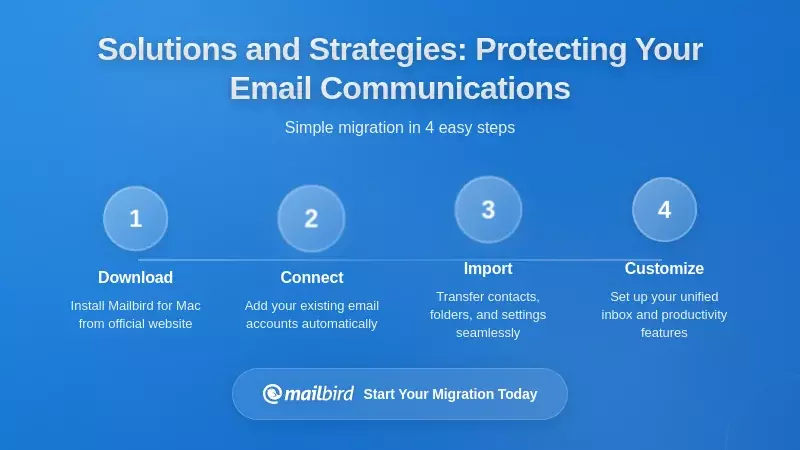
Understanding the problems represents only the first step. Implementing practical solutions ensures your email communications remain reliable despite ongoing infrastructure changes.
Implement Proper Email Authentication Immediately
Organizations should treat email authentication as core infrastructure, not an IT afterthought. According to email authentication requirements analysis, immediate action should include auditing every system that sends email from your domain, verifying SPF includes all legitimate senders, enabling DKIM signing on Microsoft 365 and Google Workspace, and moving DMARC from monitoring to an enforcement policy once alignment is verified.
Setting up reporting so you can see failures before customers feel them represents a critical step toward operational resilience. Research shows that only 16% of domains have implemented DMARC, leaving the vast majority vulnerable to both spoofing attacks and delivery failures under the new enforcement regime.
Choose Email Clients with Built-In Resilience
The widespread synchronization disruptions revealed that email client architecture profoundly influences resilience during infrastructure failures. Clients maintaining local email storage, implementing automatic OAuth 2.0 support, and consolidating multiple email accounts into unified interfaces proved significantly more resilient than cloud-only solutions.
Mailbird addresses the resilience challenges revealed by email infrastructure failures through several architectural advantages. The application consolidates Microsoft 365, Gmail, Yahoo Mail, and other IMAP accounts into a single interface, allowing immediate switching to alternative accounts when one provider experiences infrastructure failures—without requiring users to change applications or relearn interfaces.
Critically, Mailbird maintains complete local copies of messages, providing continued access to email history even when synchronization with cloud servers fails. During the Microsoft 365 outages documented in January 2026, users with cloud-only email access found themselves completely locked out while Mailbird users retained access to their locally-stored message archives.
Modern email clients handling OAuth 2.0 automatically eliminate the complexity that has plagued legacy applications still dependent on Basic Authentication. For professionals who cannot afford to miss critical communications, selecting email infrastructure that provides multiple redundancy layers—including local storage, multi-provider support, and robust notification handling—represents not merely a convenience but an operational necessity.
Manage IMAP Connection Limits Proactively
Understanding and managing IMAP connection limits prevents many synchronization issues before they occur. Each email client typically uses multiple IMAP connections simultaneously, and running multiple applications across multiple devices can quickly exceed provider limits.
Practical strategies include consolidating email access through a single unified inbox client rather than running multiple applications simultaneously, configuring email clients to use fewer simultaneous connections when possible, and monitoring connection usage patterns to identify when you're approaching provider limits.
When you experience synchronization delays or timeout errors, checking whether you've exceeded connection limits should be among your first diagnostic steps. Many apparent "server problems" actually represent connection limit throttling that resolves once you reduce the number of simultaneous connections.
Implement Email Redundancy and Failover Planning
Business continuity planning should explicitly account for email provider outages alongside other infrastructure failures. When major providers like Microsoft 365 experience infrastructure failures affecting millions of users, organizations using cloud-only email solutions face complete communication disruption.
Practical redundancy strategies include maintaining accounts with multiple email providers rather than depending entirely on a single provider, using email clients that support multiple accounts simultaneously so you can switch providers immediately when one experiences problems, and maintaining local copies of critical email data so you can access historical communications during provider outages.
For organizations where email represents a business-critical communication channel, implementing email continuity services designed for outage scenarios provides continued email access and message delivery even when primary providers experience extended disruptions.
Understanding Email Throttling: What It Is and How to Detect It
Email throttling represents one of the most misunderstood aspects of modern email infrastructure, yet understanding it proves essential for diagnosing delivery problems.
What Email Throttling Actually Means
According to comprehensive analysis from email infrastructure experts, email throttling means intentionally limiting the number of emails sent within a specific timeframe. This can happen on your end through your sending server or email service provider, or on the receiving side by internet service providers protecting their users.
When the system detects a delivery attempt that exceeds the acceptable threshold, the result is deferred email, delays, or error messages like "rate limit exceeded." Every email service provider has limits, and most email marketing tools throttle by default, especially if you're using a shared IP address.
The most common ISP refusal scenarios involve recipient mailboxes being full, receiving servers lacking open ports to receive email, or receiving servers not recognizing the sending IP address. When ISPs throttle your emails, you typically receive a message saying something like "User's mailbox is over quota" or "User is receiving mail at too great a rate right now, please try again later."
Detecting Throttling in Your Email Infrastructure
Throttling doesn't always show up with a warning or a big red flag, but diagnostic signs include delayed delivery across your list, weird gaps in open rates that don't follow your usual timing, some users getting emails long after others even within the same email database, and status messages like "queued," "waiting," or "deferred" in your sending tool.
You can also dig into bounce logs or SMTP reports, your campaign dashboard inside the platform, and message headers if you're sending manually or through a custom integration. Some systems show delivery attempt timestamps per batch, and if you notice long gaps between those timestamps, you're likely dealing with throttled email.
If you're seeing soft bounces for unknown reasons, particularly tied to timeouts or greylisting, that's another subtle sign the receiving side is slowing you down. The more emails you send, the more important it is to catch these patterns early—throttling is often invisible, but the symptoms leave a trail.
Preventing and Managing Throttling Issues
To prevent email throttling, experts recommend scheduling emails to deploy over an extended period, segmenting emails by domain or splitting lists into multiple parts, separating marketing and transactional email traffic to keep reputations independent, and sending emails at earlier times to deploy by your completion date.
Many platforms use built-in throttling to protect your sending patterns, making it part of how they keep your email marketing campaigns out of trouble and inside real inboxes. If you're seeing small delays between batches, that's usually a sign the system is working as it should.
Where it gets tricky is when you didn't plan for throttling. If you're running transactional email traffic like password resets or order confirmations, timing matters and delays can hurt the user experience. You should also look closer if you're seeing frequent error messages or delivery pauses that last hours instead of minutes, as that could be a sign of stricter blocks or low trust.
Infrastructure Concentration Risks: The Cloudflare Case Study
The email infrastructure disruptions occurred within a broader context of internet infrastructure concentration that creates systemic vulnerabilities.
The November 2025 Cloudflare Outage
In November 2025, a significant service disruption at Cloudflare triggered widespread availability issues across the internet, affecting websites, APIs, and SaaS platforms that depend on the provider for DNS resolution, content delivery, and perimeter protection. According to Cloudflare's official post-incident analysis, the incident resulted from a software bug in generation logic for a Bot Management feature file that exceeded expected size parameters.
The outage began at 11:20 UTC and lasted approximately 6 hours until resolution at 17:06. The software had a limit on the size of the feature file that was below its doubled size, causing the software to fail. Rather than gracefully handling the oversized file, Cloudflare's core proxy began triggering errors for any traffic dependent on bot management functionality.
The impact proved immediate and visible: within minutes, a significant percentage of monitored Cloudflare-dependent services were returning HTTP 5xx errors indicating server-side processing failures rather than network connectivity issues. Organizations responded differently—some executed DNS failover to bypass Cloudflare and serve directly from their own infrastructure, accepting the trade-off of restored availability against loss of Cloudflare's services.
Lessons for Email Infrastructure Resilience
According to cybersecurity analysis examining infrastructure concentration risks, what was clearly eye-opening about the Cloudflare incident was how quickly an upstream failure propagated across more-or-less unrelated organizations. Reliance on a single external service for multiple critical functions creates cascading failure conditions that are difficult to mitigate in real time.
In effect, architectural "convenience" has quietly replaced architectural diversity. This consolidation simplifies operations and improves performance under normal conditions, but it also reduces an organization's ability to degrade gracefully when a provider experiences issues.
Third-party availability failures can have business impact equivalent to security incidents, even in the absence of compromise. Concentration risk increases when multiple critical functions are delegated to a single vendor. Business continuity planning should explicitly account for upstream provider outages, not just internal failures. True resilience depends on understanding where external dependencies have become single points of failure.
Looking Forward: The Future of Email Infrastructure
The infrastructure disruptions of 2025 and early 2026 represent not isolated incidents but rather a fundamental transformation in how email infrastructure operates and how providers balance security, deliverability, and user experience.
Continued Authentication Enforcement
The shift toward strict authentication enforcement will continue and likely accelerate. Providers have made clear that the era of permissive email delivery policies has ended permanently. Organizations that have not yet implemented proper SPF, DKIM, and DMARC configurations will face increasing delivery failures as enforcement mechanisms become more sophisticated.
However, this enforcement paradoxically creates new vulnerabilities. Sophisticated phishing attacks increasingly abuse legitimate cloud and SaaS infrastructure to deliver malicious content, undermining reputation-based defenses and user trust assumptions. Rather than relying on obviously malicious servers or throwaway domains, threat actors increasingly host phishing pages, payloads, and redirectors on reputable platforms such as cloud storage providers and well-known hosting companies.
Email Client Architecture Evolution
The infrastructure failures revealed that email client architecture profoundly influences user experience during provider disruptions. The industry will likely see continued evolution toward clients that provide better resilience through local storage, multi-provider support, and automatic protocol adaptation.
Microsoft's decision to remove IMAP support from New Outlook for Windows represents a concerning trend toward proprietary protocols and vendor lock-in. However, the user backlash against this decision suggests that demand for open standards and interoperability remains strong.
Regional Infrastructure Maturation
Email deliverability performance will likely continue improving in developing regions as infrastructure matures and authentication adoption increases. However, the fundamental challenge of balancing security enforcement with legitimate email delivery will persist across all regions.
Organizations operating globally must continue managing the complexity of different regional requirements, privacy regulations, and provider policies. The days of one-size-fits-all email infrastructure approaches have ended, replaced by the need for sophisticated multi-regional strategies that account for local variations in infrastructure quality and regulatory frameworks.
Frequently Asked Questions
Why did my email suddenly stop syncing in December 2025?
The sudden email sync failures in December 2025 primarily resulted from Comcast's IMAP infrastructure experiencing widespread connectivity failures beginning December 6, 2025. According to research findings, users across multiple geographic regions reported sudden inability to synchronize incoming emails through IMAP connections while webmail access through browsers continued functioning normally. This selective failure pattern indicated server-side configuration changes related to Comcast's planned migration to Yahoo Mail infrastructure. Additionally, many users exceeded IMAP connection limits by running multiple email applications across multiple devices simultaneously, with Yahoo limiting concurrent connections to as few as five while Gmail permits up to fifteen.
What is OAuth 2.0 and why do I need it for my email?
OAuth 2.0 represents a modern authentication protocol that provides significantly better security than the older Basic Authentication method. Google completed Basic Authentication retirement for Gmail on March 14, 2025, forcing all email clients to implement OAuth 2.0 authentication, while Microsoft began complete enforcement on April 30, 2026. The transition improves security by allowing applications to access your email without storing your actual password, instead using temporary access tokens that can be revoked if compromised. However, many email applications and older devices never implemented OAuth 2.0 support and cannot be updated, requiring users to either switch to OAuth-compatible email clients or generate app-specific passwords through their provider's account security settings.
How can I prevent losing email access during provider outages?
The most effective strategy for maintaining email access during provider outages involves using an email client that maintains complete local copies of your messages rather than depending entirely on cloud-only access. During the Microsoft 365 outage in January 2026, users with cloud-only email access found themselves completely locked out, while users with email clients maintaining local storage retained access to their email history. Mailbird specifically addresses this vulnerability by maintaining complete local copies of messages and consolidating multiple email providers into a single interface, allowing immediate switching to alternative accounts when one provider experiences infrastructure failures. Additionally, maintaining accounts with multiple email providers rather than depending entirely on a single provider provides redundancy that proves invaluable during extended disruptions.
What are SPF, DKIM, and DMARC, and why do they matter now?
SPF (Sender Policy Framework), DKIM (DomainKeys Identified Mail), and DMARC (Domain-based Message Authentication, Reporting, and Conformance) represent email authentication standards that verify messages actually come from the domains they claim to represent. Beginning in November 2025, Gmail fundamentally transformed from routing non-compliant messages to spam folders to actively rejecting them at the SMTP protocol level, meaning messages from domains without proper authentication never reach recipients in any form. Microsoft and Yahoo implemented comparable requirements, creating a coordinated authentication enforcement environment. Research shows that only 16% of domains have implemented DMARC, leaving the vast majority vulnerable to delivery failures. Organizations should immediately audit every system that sends email from their domain, verify SPF includes all legitimate senders, enable DKIM signing, and move DMARC from monitoring to enforcement policy.
Why do some of my email accounts work while others fail in the same application?
This frustrating situation typically results from the staggered authentication protocol transition timelines implemented by different providers. Google completed Basic Authentication retirement for Gmail on March 14, 2025, immediately requiring OAuth 2.0 support, while Microsoft continued allowing Basic Authentication for SMTP AUTH through early 2026 with complete enforcement reaching April 30, 2026. This meant email clients needed OAuth 2.0 support for Gmail immediately while Microsoft accounts continued working with Basic Authentication for several additional months. Organizations managing both Gmail and Microsoft 365 accounts found themselves unable to update their email clients because updating to support Gmail's OAuth 2.0 requirement would break Microsoft accounts still relying on Basic Authentication. The solution involves using modern email clients like Mailbird that handle OAuth 2.0 automatically for all providers, eliminating the complexity that plagued legacy applications.


